
We kicked off our 2025 delve into Call of Cthulhu with a group character generation Session 0. CoC is one of a few games where you kind of have to resign yourself to playing a doomed character (where the doom isn’t the aesthetic – although fortunately there are lots of those games too): we’ve played and enjoyed Paranoia and Legend of the Five rings, both of which teach you to grasp the longevity of your characters lightly, albeit from very different approaches.
With Paranoia, you never really need to develop a background or any kind of personality before you start placing your clones directly in front of the slings and arrows of outrageous fortune. Hell, your many comical deaths may form part of your personality.
With L5R, you FULLY develop your samurai and from the very beginning plan for their tragic, duty-burdened, heroic end. In L5R the heroic death is maybe the only desire the samurai has that is actually attainable.
Call of Cthulhu is about ordinary people, (stiflingly ordinary sometimes), versus absolutely ridiculous odds. Doom is on the cards, but the protagonists are neither throwaway clones nor super-competent warrior-poets with divine blood and holy swords. They’re usually just nerds: but their ordinariness is what makes their possible descent, fast or slow, a distinguishing part of the CoC experience.
Everyone made two characters and we talked about their sort of specialties and personalities and how they might all fit together. I think this is good general practice for most RPGs; even more so for games with decent PC longevity. But it’ll work for CoC too.
From that we got a “first team” and a bunch of backups. One slow change that CoC made over the course of 7 editions is a creep in skill points, making for a more rounded character, with lots going on. Nothing wrong with that, especially if you are playing in small groups of 2-3, at which CoC excels and certainly for pulpier versions of the game. But with seven people sitting down when everyone can make it… that’s a lot of competence. Too much competence!
This way I hoped that everyone would have their niche, their little acre of competence and chance to shine.
- Leon – a Judge Advocate General in the navy
- Terrance (Terrence? Terence?) – a coroner
- Shea – a legitimate businesswoman
- Bradford – a dilettante from an old Boston family
- Emil – a veteran (and I think maybe explorer?)
- Timely Tom – a gentleman of the road
- Wilbur – an archaeologist
We covered some of the rules and rule changes. CoC is a fundamentally simple game, with just about everything involved on display from the start. There is no gradual growth of complexity of the characters like D&D. There have been only a few rules changes across the 7 editions, but all the recent changes seem like pretty cool story mechanisms.I’ll get to them when we get to them.
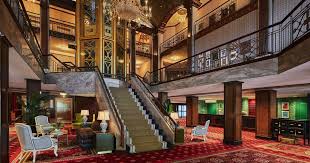
I’m starting things off with The Shadow Over Providence, a scenario originally run for NecronomiCon in Providence in 2019. The con was held in the Biltmore Hotel, which was the model for the “Milton Hotel”. So that must have been pretty cool.
Anyway, while a lot of the setup is my work, the vast bulk of the plot is from the scenario by Jon Hook. If you are interested in playing this scenario, I’d quit reading now. I’m going to go light on details anyway, but this is a good short scenario that I really didn’t change much at all.

What brought all of these people together was the Society of the Friends of Abydos, a social club for people who really like Ancient Egypt. We kicked things off in the late summer of 1923, while a second wave of Egyptomania was sweeping the western world: primarily, but not solely, ignited by the Carter expedition’s uncovering of the (mostly) untouched tomb of Tutankhamun.
The society was the pet project of Gerald Frazer, a wealthy Boston financier, who funded the dinners, lectures and social events to entertain his brother (Carlton, a respected amateur Egyptologist) and wife (Dorothy, a social butterfly who adored the (mostly reimagined) styles of the Nile kingdoms. The society was enthusiastically welcoming to all manner and stripe of Egypt nerds.
Our story started with the bus ride to a preview showing of artifacts from the Tutankhamun find, “The Kingdom of Fire”, presented by Dr. Catherine Bronson, senior curator at the British Museum. Dr Bronson would be presenting at Brown University the following week, but this presentation was a way to say thank you to the financial backers of this tour.
Despite the dismal stormy weather of the past days, the chartered bus journey was a jolly affair, with impromptu music and songs, the occasional flask circulating and general good natured chat.
Arriving at the Milton Hotel, Gerald did all the talking and got their tickets for the ballroom on the top floor. Once up there they waited for a short while before being allowed in to circulate amongst the well-documented artifacts and their fellow gawkers.
- Leon – found a particular shabti figure, a pharaonic figure of red jasper that he found beguiling.
- Terence – did a spot of sketching.
- Shea – spotted insurance investigator of her acquaintance among the viewers.
- Bradford, Tom and Emil – went around reading the informative cards by each exhibit as much as they could, observing the people around them
- Wilbur – was particularly taken by the amulets on display.
After taking in the various funerary goods, they headed down for lunch before returning for Dr Bronson’s lecture and that’s when things went south.
Dr Bronson came out on the small band stage of the ballroom, all cut-glass accent and professional charm. She talked for a good long while about the exciting developments in the Valley of the Kings and what the findings mean for the field of Egyptology. But she finally got to the juicy reveal: an intact canopic jar, this one well documented at the time of its entombment.
The black urn contained the remains of one Ibnhotep, treacherous advisor to the Boy King, whose failed attempt at regicide bought him a one way ticket to oblivion and an afterlife denied.
And suddenly the lights cut out and the gunfire started. The crowd panicked blindly in the darkness as chunks from the ceiling rained down on them. Well that was bad, but it got worse.
In the darkness, Wilbur (I think) tried to push his way towards the stage as everyone fought to avoid being swept with the panicking crowd and he smashed into a photographer who had been covering the event. The photographer’s flash went off and for a split explosive second it illuminated the stage.
All but Terence were turned towards the stage in the darkness so only Terence was spared the sight. On stage a horrified Dr Bronson was holding at arm’s length a dark blot: A twisting, scabrous mass that defied any place in the natural world.
The screams of the crowd changed from alarm and fright to terror and frenzy. The gunfire – thus far confined to causing chaos – was now levelled lower, into the crowd. Bodies fell in the dark and a terrible long shriek of pain emanated from the stage.